1
The Baltic is different
Shallow, busy, acoustically complex and strategically sensitive. It needs systems optimized for littoral operations — not only deep-ocean platforms.
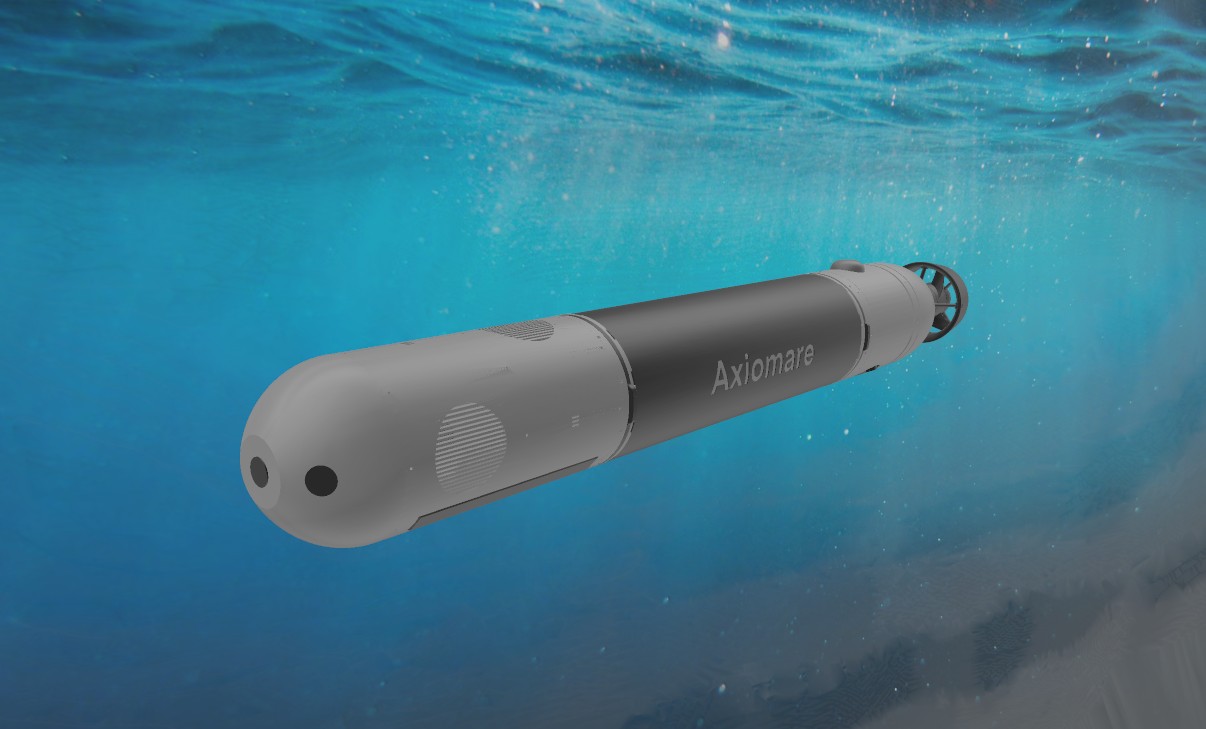
Axiomare develops affordable, AI-driven UUV fleets built in Europe — designed for shallow waters, resilient operations and rapid deployment.
Shallow, busy, acoustically complex and strategically sensitive. It needs systems optimized for littoral operations — not only deep-ocean platforms.
Large UUVs are capable but expensive. Smaller networked fleets can provide broader coverage and faster operational learning.
AI-assisted mission execution, acoustic perception and health monitoring reduce operator workload and improve mission repeatability.
European-built, ITAR-free systems can shorten procurement paths and align with regional security needs.
The system combines proven off-the-shelf components with AI-first autonomy, acoustic sensing and fleet-level mission control.
Mission planning, waypoint execution, sensor fusion and return-to-surface logic designed for non-tethered operations.
Hydrophone, sonar and edge-AI pipelines for acoustic classification, object awareness and mission-relevant data products.
Mesh-oriented concepts for UUV-to-UUV and surface coordination, with public details intentionally limited until NDA review.
Axiomare’s public technology story should show credibility without exposing sensitive tactical implementation details.
Initial messaging focuses on launch use cases with dual-use extensions later.
Axiomare focuses on scalable fleets for shallow, contested and infrastructure-rich waters — where affordability, availability and rapid iteration matter.
Core differentiators:
EU-built · ITAR-free posture · Baltic/littoral optimized · fleet-native · AI-first · off-the-shelf speed.
| Approach | Strength | Limitation | Axiomare angle |
|---|---|---|---|
| Large XLUUVs | High endurance, large payload | Very high cost, long cycles, limited deployability | Smaller networked fleets for faster scaling |
| Classic survey AUVs | Proven industrial and research operations | Often legacy autonomy and not fleet-first | AI-first mission architecture from the start |
| ROVs / divers | Direct control and inspection detail | Tethered, labor-intensive, risk/cost constraints | Autonomous recurring missions with lower operational burden |
A staged development path from foundation work through acoustic sensing, mesh navigation and integrated fleet prototypes.
We are preparing pilot conversations with maritime security, infrastructure and technology partners. Detailed specifications are available only in controlled discussions.